Read more.
VIEW ALL
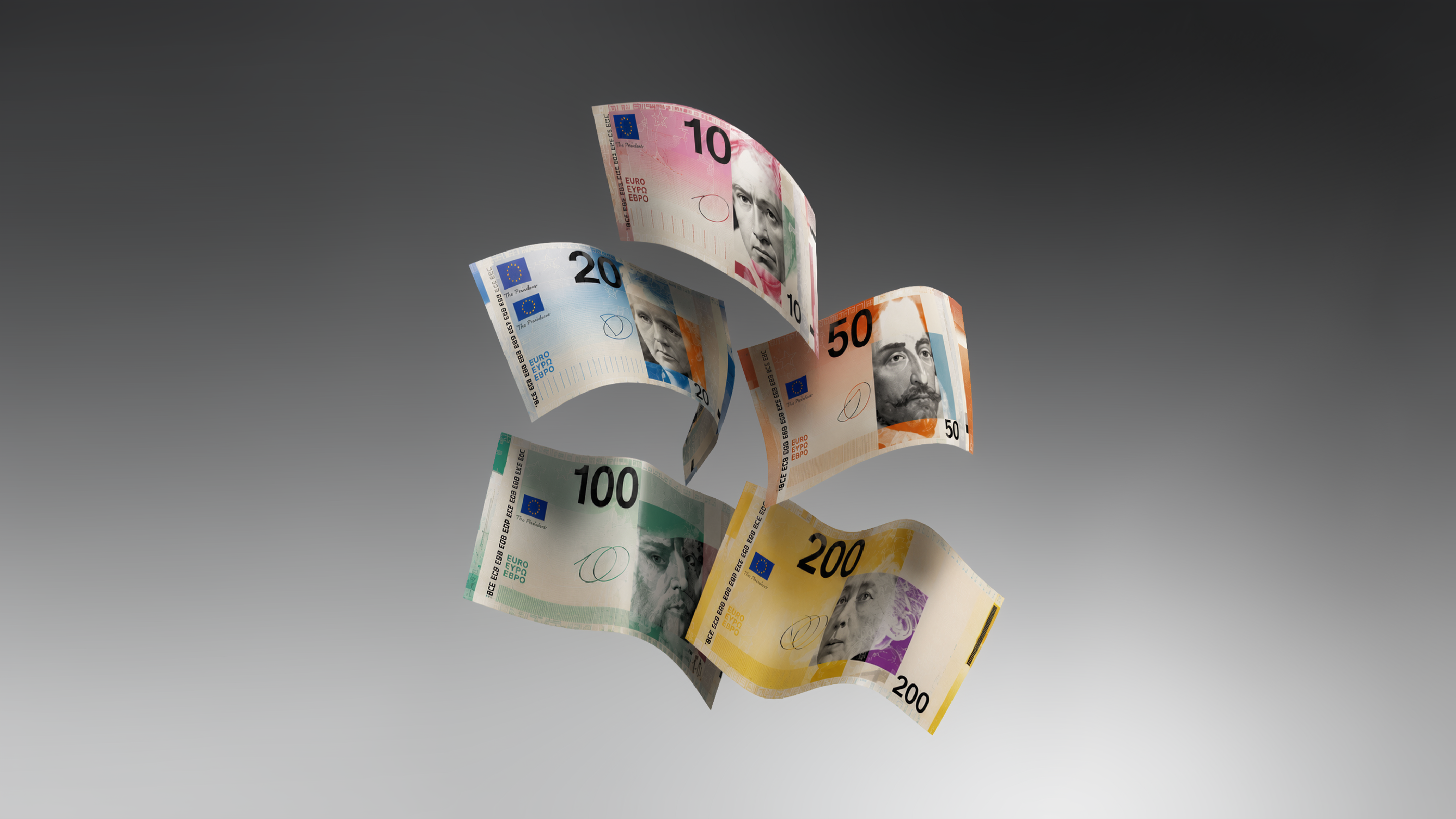
The European Central Bank has unveiled 10 finalist designs for the first complete redesign of euro banknotes since their introduction in 2002. The selection process has been organized around two main themes: one focused on prominent figures in European culture and science, and another dedicated to biodiversity, featuring various bird species alongside European institutions on the reverse side.
The process has been unusually open: after reviewing more than 1,200 proposals, a jury applied a rubric of 13 weighted criteria, where creativity accounts for 25%, aesthetics for 20%, and public recognition for only 5%. For the latter, a public consultation has been opened that will remain active until September 21, running in parallel with a representative survey conducted by an independent firm, allowing European citizens to share their opinions on the finalist designs.
The final decision on the winning design is expected by the end of the year, although a date for their entry into circulation has not yet been confirmed.
.png)
After announcing the public consultation as an exercise in active listening, a wave of parodic redesigns has been unleashed on social media, which makes the decision to open up the process even more interesting. For over two decades, this was the exclusive territory of a technical jury and a handful of institutions. Now, they have decided to invite 350 million citizens to weigh in on one of the most widely used (literally) symbols of identity on the planet. It is a move toward participatory branding on a scale that almost no private brand could afford, exposing both its advantages (legitimacy and relatability) and its risks (losing control of the narrative and having the joke overshadow the serious message).
The fact that people feel confident enough to humorously reinterpret their own currency design says something positive about how accessible the consultation has been. Brands often fear this type of reaction and avoid opening up their identity decisions to the public for fear of ridicule. The ECB has consciously taken that risk, and the result of that massive reach and conversation is exactly what any brand team would dream of achieving with a paid campaign.
In this process, transparency matters as much as the final result: laying out their full rubric of criteria, explaining why creativity is weighted more heavily than immediate recognition, and giving the public real time to weigh in before deciding. That level of openness drastically reduces the risk of mass rejection; when people feel they have participated in the decision, they are much less likely to feel it as an imposition.
Redesigning something that everyone uses daily—a banknote, a logo, an app—is one of the riskiest brand identity exercises that exists, precisely because there is no way for the change to go unnoticed. Choosing to manage that risk with radical transparency and letting people participate, even through memes, leads us to a question every brand should ask itself before embarking on something similar: when does it make sense to open such a process to the public, and when is it better not to?
There is no single answer, because every brand, every symbol, and every moment involves different variables: the level of trust already built with the audience, what is at stake if the exercise goes wrong, or whether the identity itself needs that gesture of closeness to remain relevant. What is clear is that an institution of the ECB's caliber, with everything it represents and everything it has at stake, has not taken this decision lightly. It has read the current moment in Europe very well—the desire for participation and the distrust of top-down impositions—and has responded with a proposal that has already set a precedent for innovation in its field. And that is perhaps the most valuable lesson of all: innovation is not always in what is changed, but in understanding when and how to open the door for others to be part of the change.